Belts
Do not order your trouser size
Trouser sizing and belt sizing are unrelated, and guessing between them is the single most common reason a belt goes back. Two minutes with a belt you already own settles it properly.
Measuring, the reliable way
- 01Take a belt you already wear and like, and lay it flat.
- 02Measure from the fold at the buckle — not the tip of the prong, not the outer end of the buckle — to the hole you actually use.
- 03That figure in centimetres is your size. Order the strap that covers it.
- 04If you are between two, take the longer one. Every strap here trims down; none of them grows.
If you have no belt to measure
Run a tape measure around your waist over the trousers you will wear the belt with, through the loops, pulled to where it will actually sit. Add nothing. That figure is close enough — our straps ship at 115 cm or 120 cm and are cut down, so a small error costs you nothing.
Trimming at home
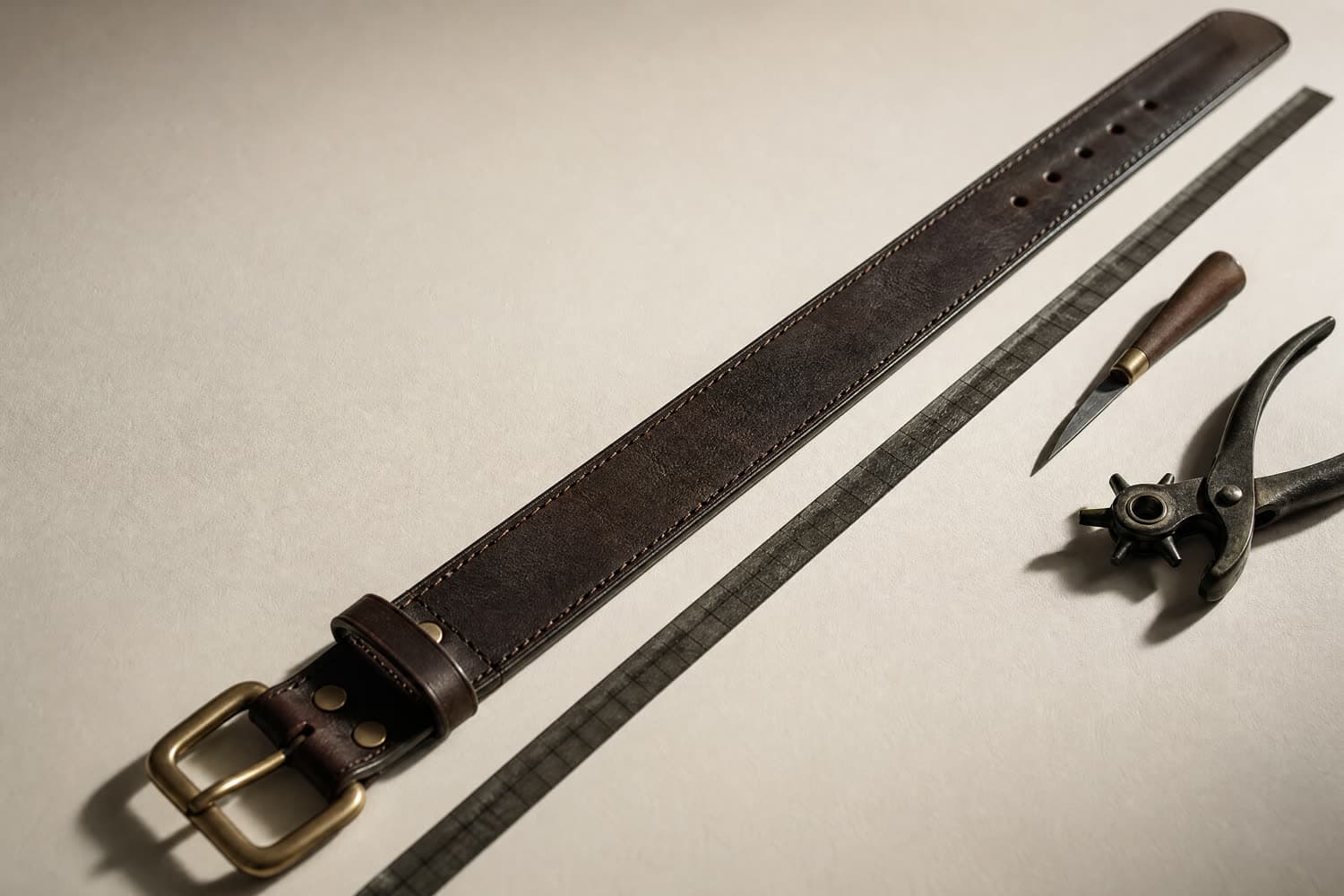
Every 35 mm and 40 mm strap we make is held to its buckle with two Chicago screws, so the buckle comes off in a minute and goes back on in another.
- 01Undo the two Chicago screws with a flat driver or a coin, and take the buckle and keeper off.
- 02Try the strap on through the loops and mark where you want the tip to sit — usually with the tail reaching the first loop past the buckle.
- 03Measure back from your mark by the distance between the buckle fold and the first hole on the old belt, and cut there with a sharp blade against a steel rule. One firm pass, not several timid ones.
- 04Round the corners of the new tip if you like, then rub the cut edge with a damp cloth and burnish it with the back of a spoon until it darkens and goes smooth.
- 05Refit the buckle and the keeper, and tighten both screws. A drop of clear nail varnish on the threads stops them backing out.
Belts that adjust without holes
If your waist moves through the year, two of ours do not depend on hole spacing at all.
Ratchet Belt — Micro-Adjust
A moulded track on the flesh side at 5 mm pitch gives around thirty positions instead of seven.
Braided Leather Belt
The prong passes between the strands anywhere along the braid, so the adjustment is continuous. Allow for about 10 mm of relaxation in the first month.
Width, and your loops
- 30 mm
- Suit and dress trousers. A 35 mm strap will often not pass the loops.
- 35 mm
- The general-purpose width. Chinos, most jeans, most trousers.
- 40 mm
- Workwear and heavy jeans. Check your loops before ordering.
The belt line
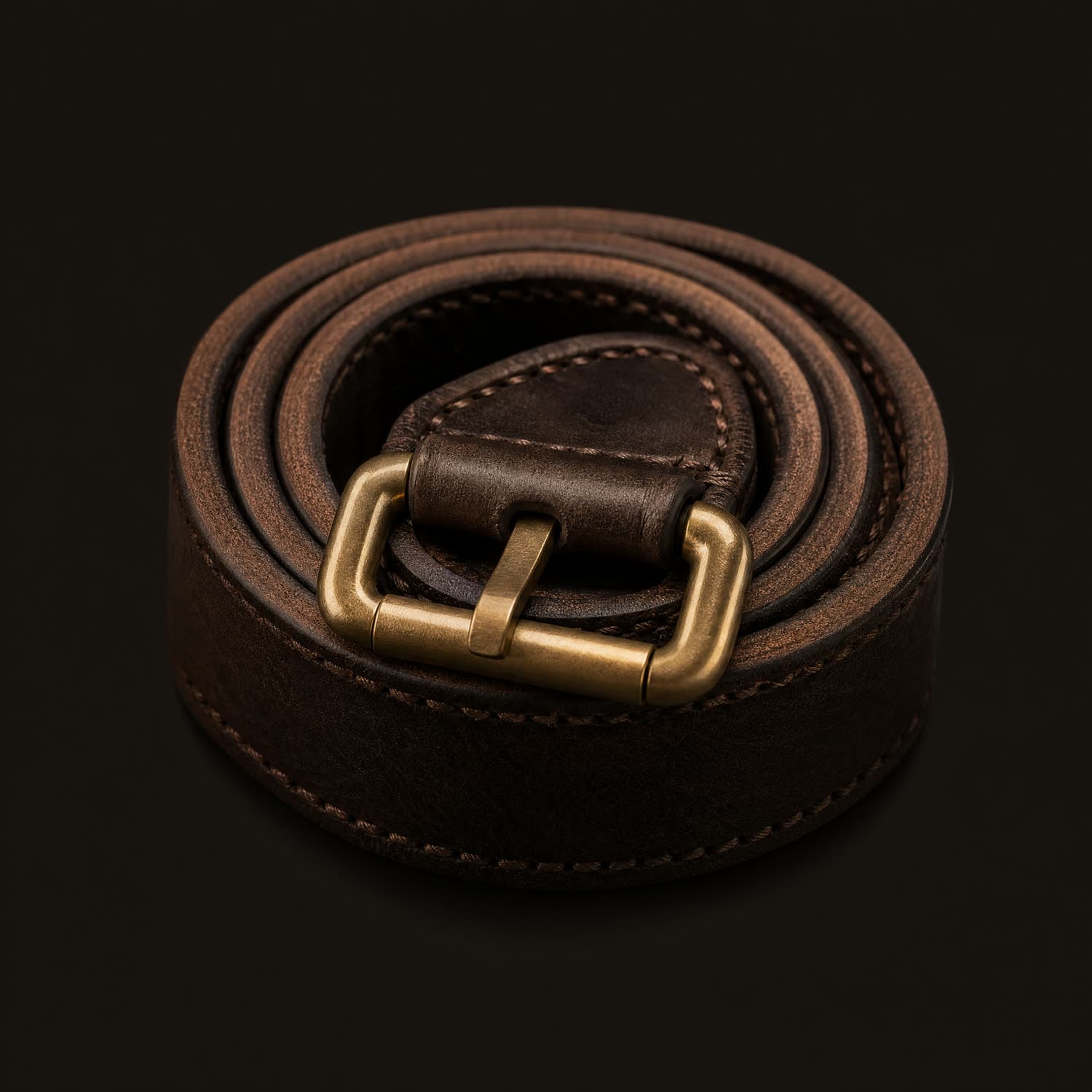
Classic Buckle Belt 35 mm
3.6 mm · Full-grain cowhide
59,00 €
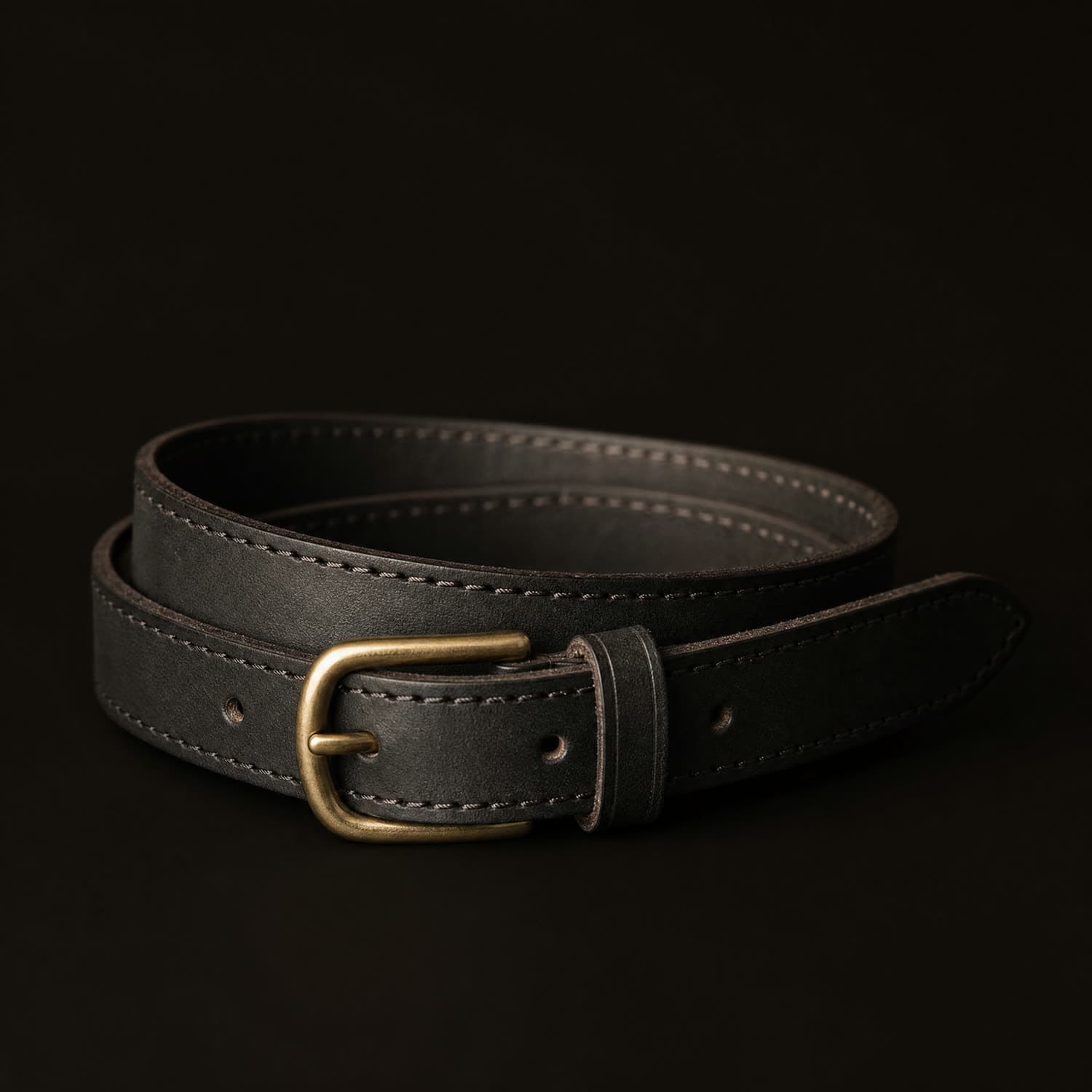
Dress Belt 30 mm
3 mm · Full-grain cowhide
55,00 €
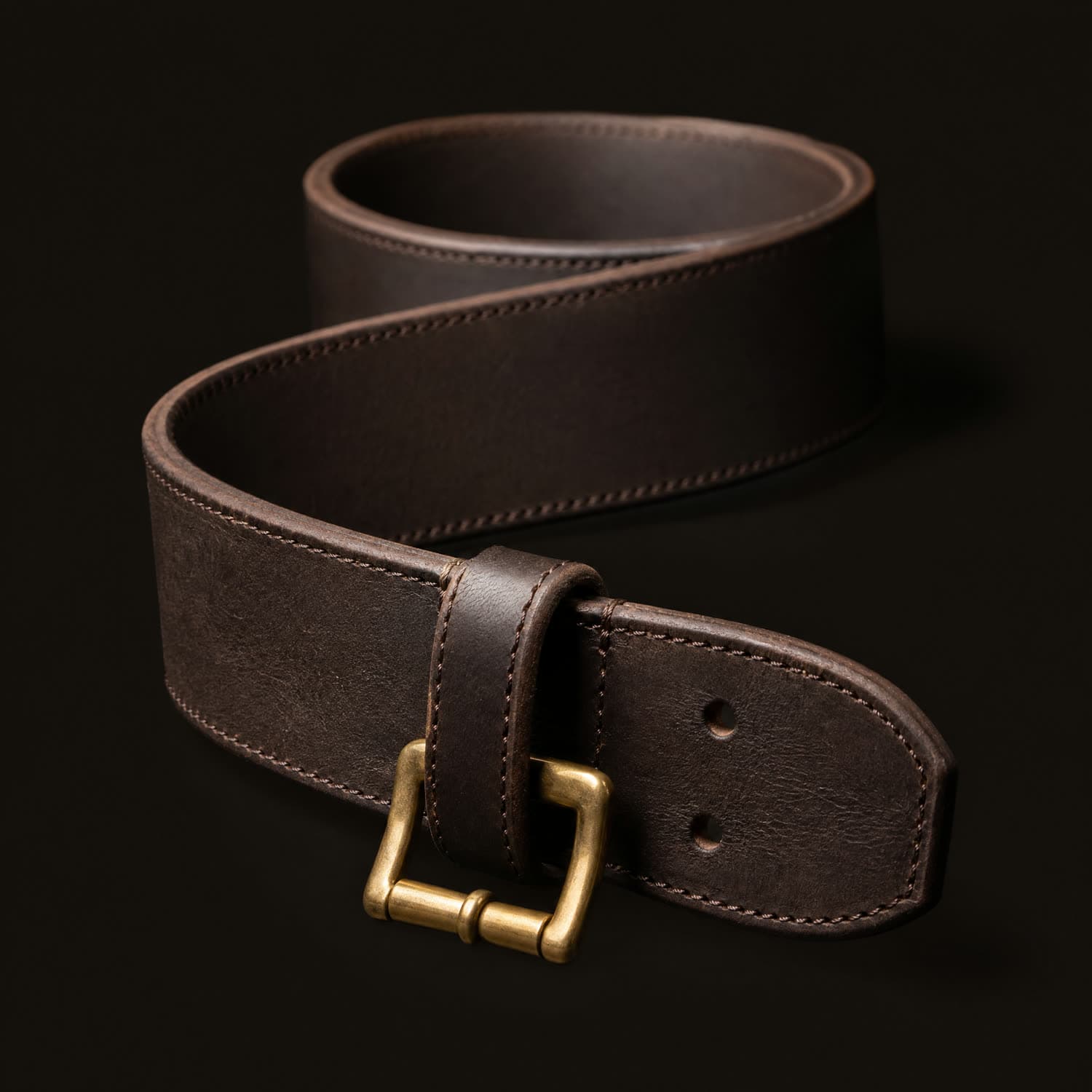
Casual Belt 40 mm
4 mm · Full-grain cowhide
57,00 €
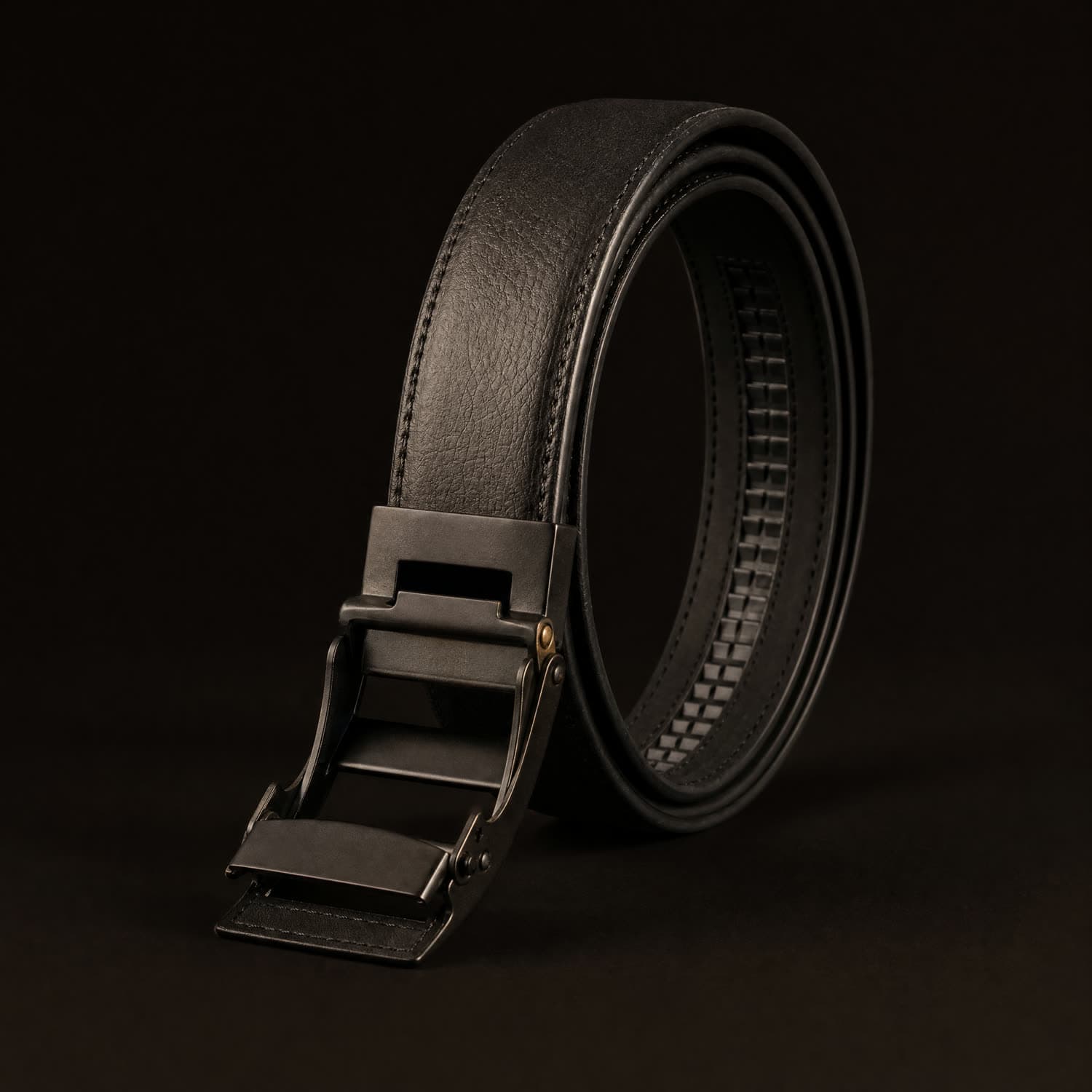
Ratchet Belt — Micro-Adjust
3.2 mm · Full-grain cowhide
69,00 €
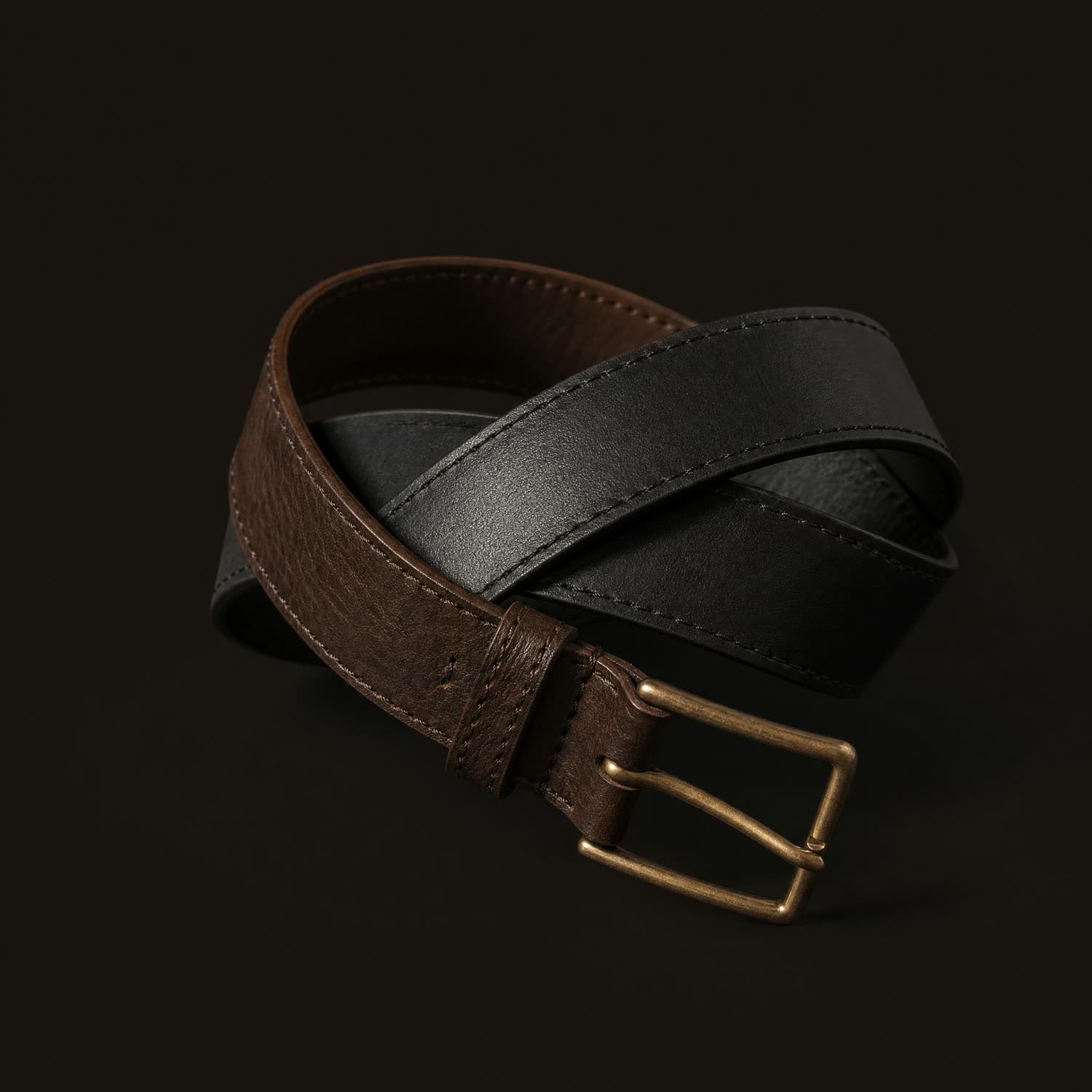
Reversible Belt
3.4 mm · Two plies bonded and stitched: full-grain cowhide on both faces
72,00 €
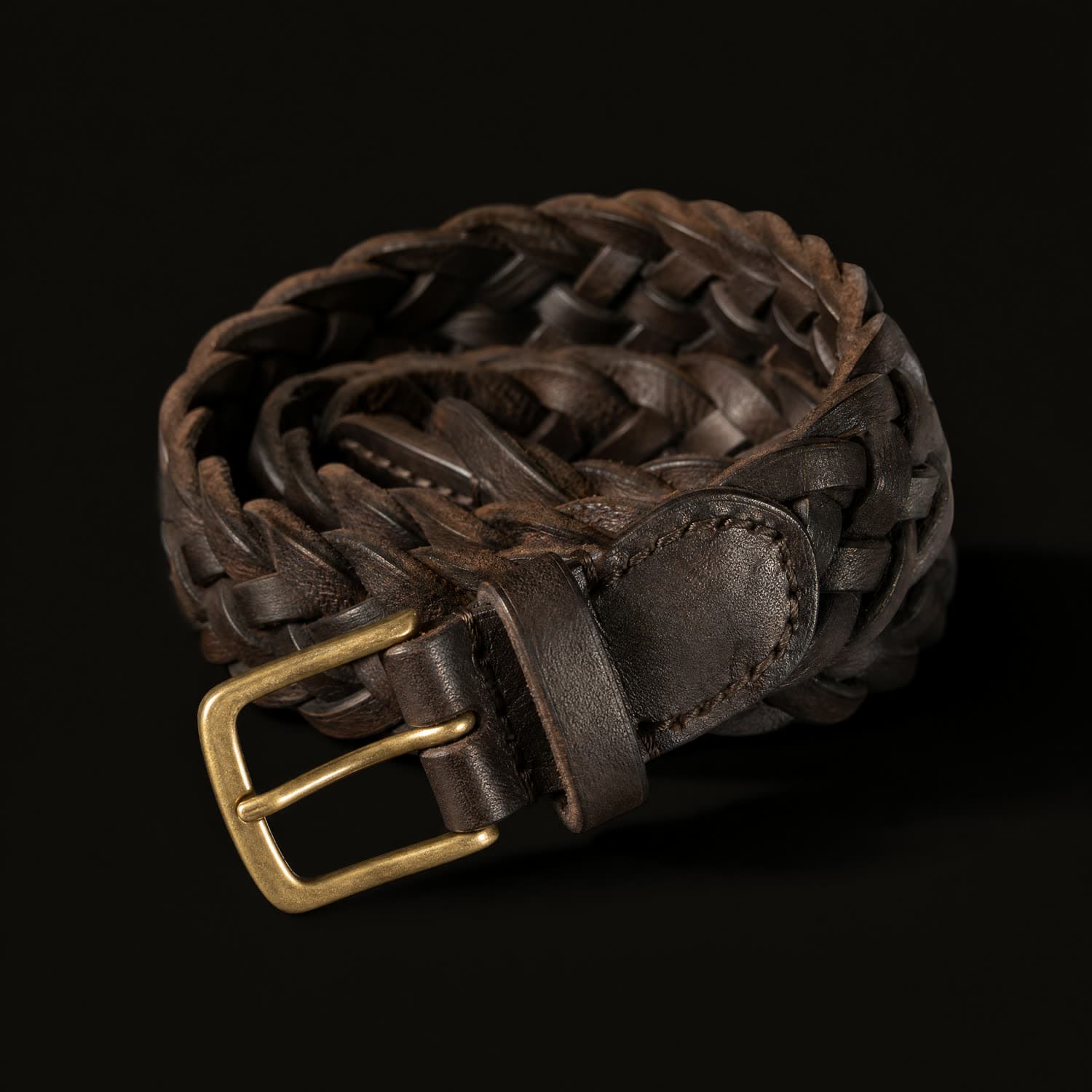
Braided Leather Belt
3.8 mm · Full-grain cowhide
64,00 €
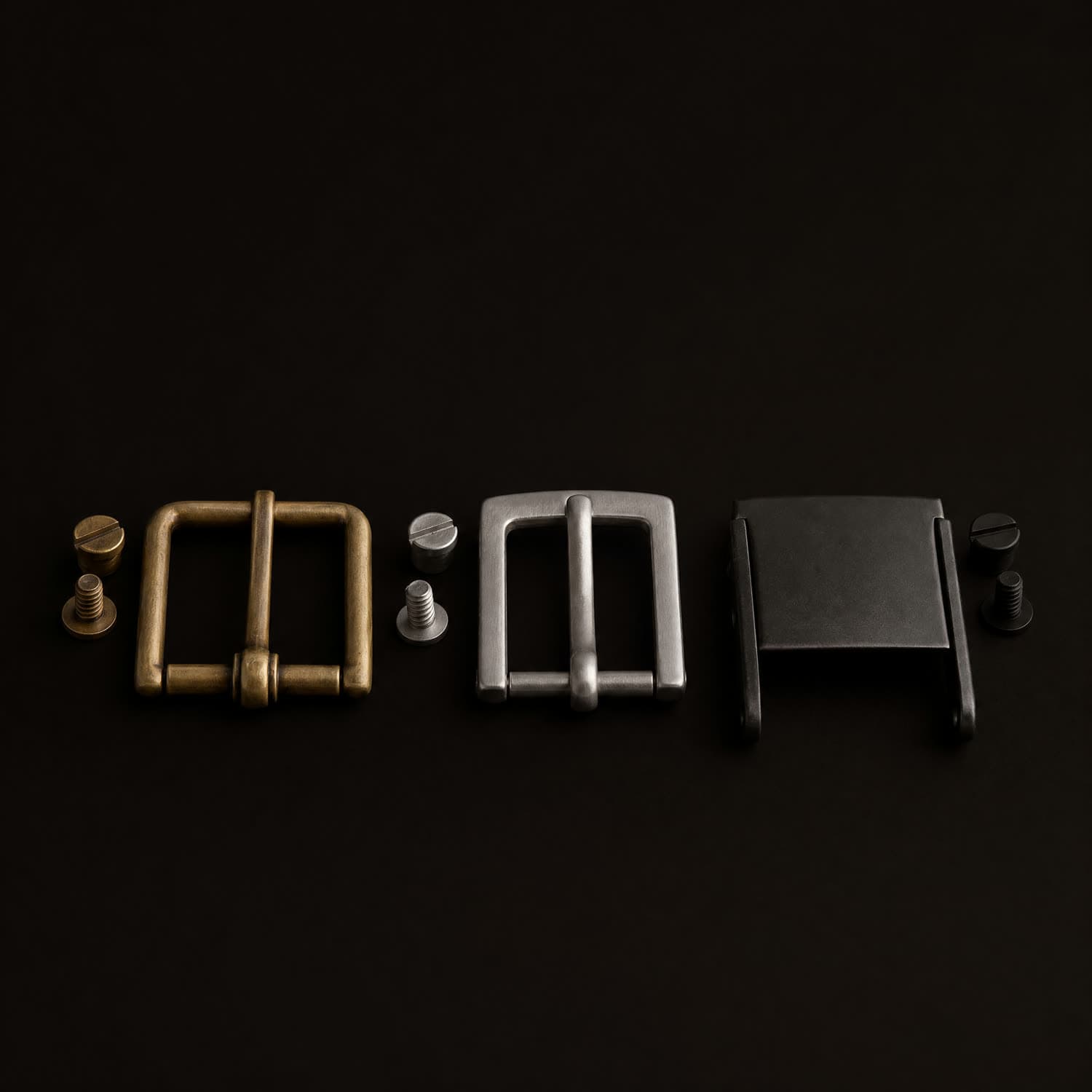
Belt Buckle Set — Interchangeable
No leather — brass and stainless steel buckles
39,00 €
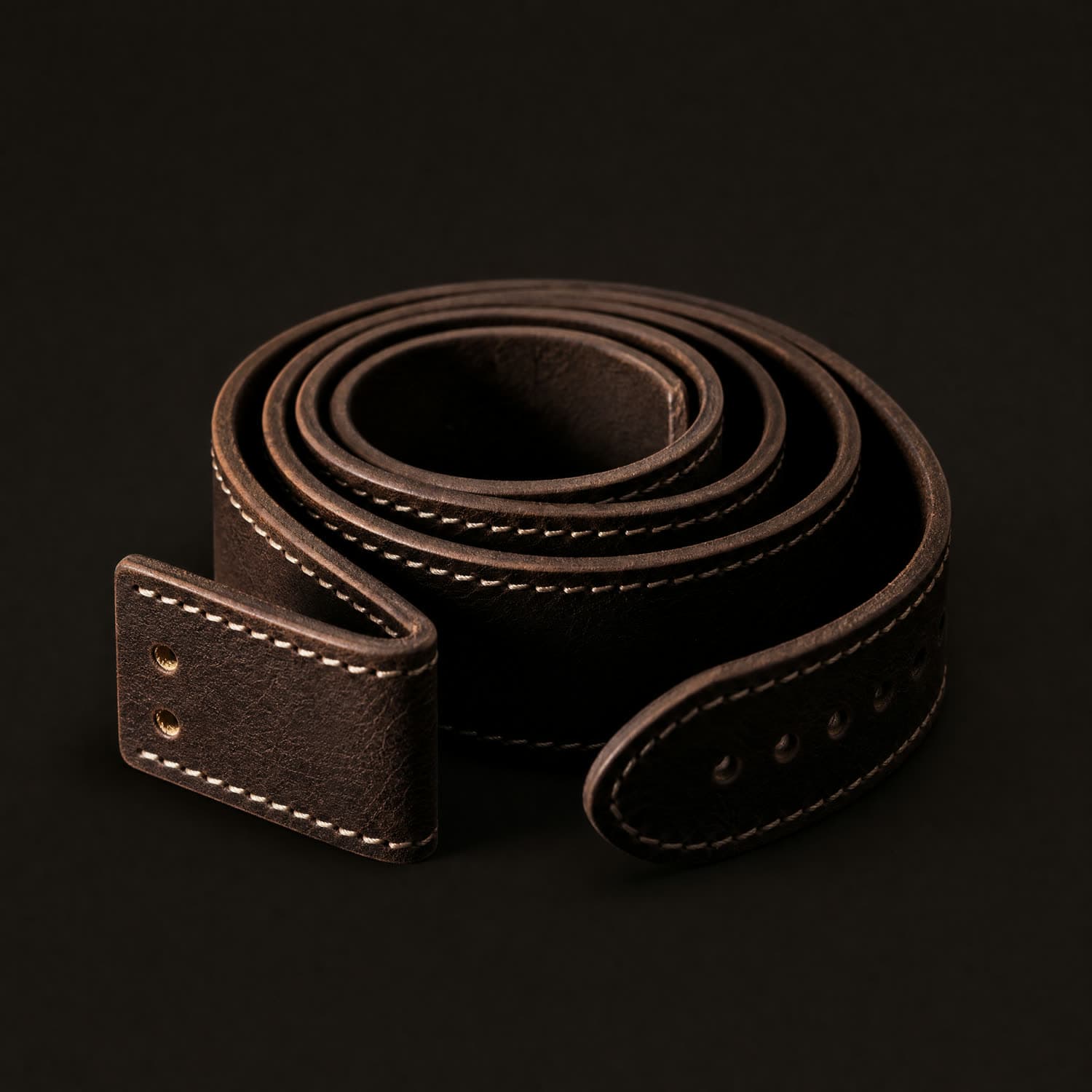
Belt Strap Only — No Buckle
3.6 mm · Full-grain cowhide
44,00 €