Care
Ten years is a maintenance schedule, not a promise
A wallet that is wiped occasionally and fed twice a year genuinely does last a decade. One that is never touched dries out, and dry leather cracks where it folds. The whole routine takes about five minutes, twice a year.
The schedule
- Weekly, roughly
Wipe with a dry cloth
Removes the grit that does the actual abrading. Takes ten seconds and is worth more than any product.
- Every 3–6 months
A thin coat of balm on vegetable-tanned leather
Replaces the oils that light and handling drive out. Thin means barely visible on the cloth. Leave it an hour, then buff.
- Twice a year
A thin coat on chrome-tanned leather
Chrome-tanned hide holds its oils far better. More than twice a year achieves nothing.
- Twice a year
Balm the flesh side of a belt
The strap folds through the buckle in one place for years. That is where it will eventually crack, so feed it there.
- After a soaking
Dry slowly, away from heat, then balm once dry
Water leaves; the oils it carried away do not come back on their own.
Doing it properly
- 01Test on a hidden area first — under a flap, inside a fold — and wait an hour. Balm darkens leather, sometimes more than you expect, and always permanently.
- 02Take up a small amount on a cloth, not on your fingers. Less than you think: a 50 ml tin should last three years across a full carry.
- 03Work it in with small circles across the whole panel, not just the dry-looking parts.
- 04Leave it an hour at room temperature so it soaks in.
- 05Buff hard with the dry side of the cloth until nothing more comes off. If it still feels tacky the next day, you used too much — keep buffing.
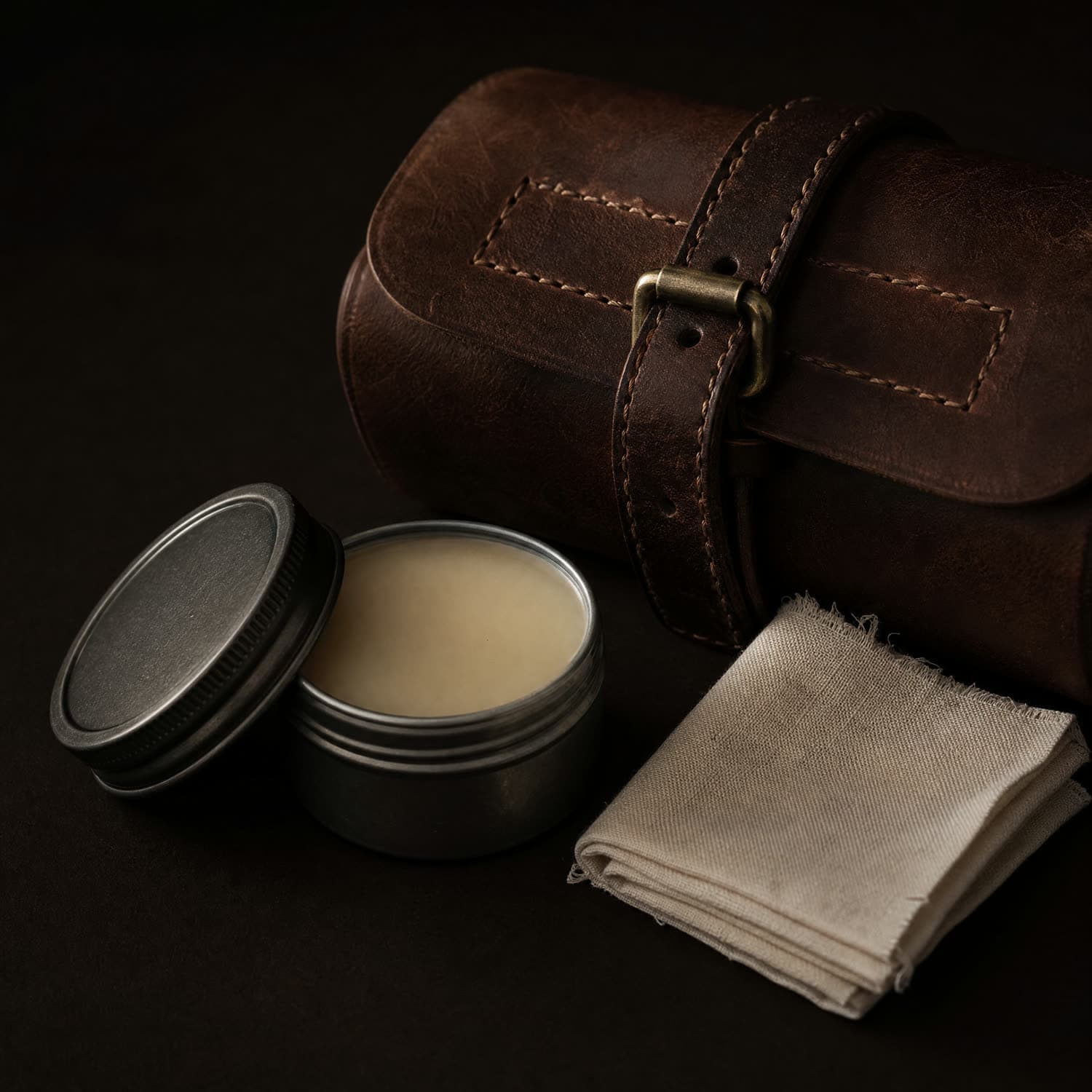
TW-X07
Leather Care Starter — Balm and Cloth
A neutral beeswax and lanolin balm with a cotton cloth. Solvent-free, but still test it on a hidden area first.
24,00 €
See the balmContains lanolin. Keep away from children and pets. Test on a hidden area first. Safety information.
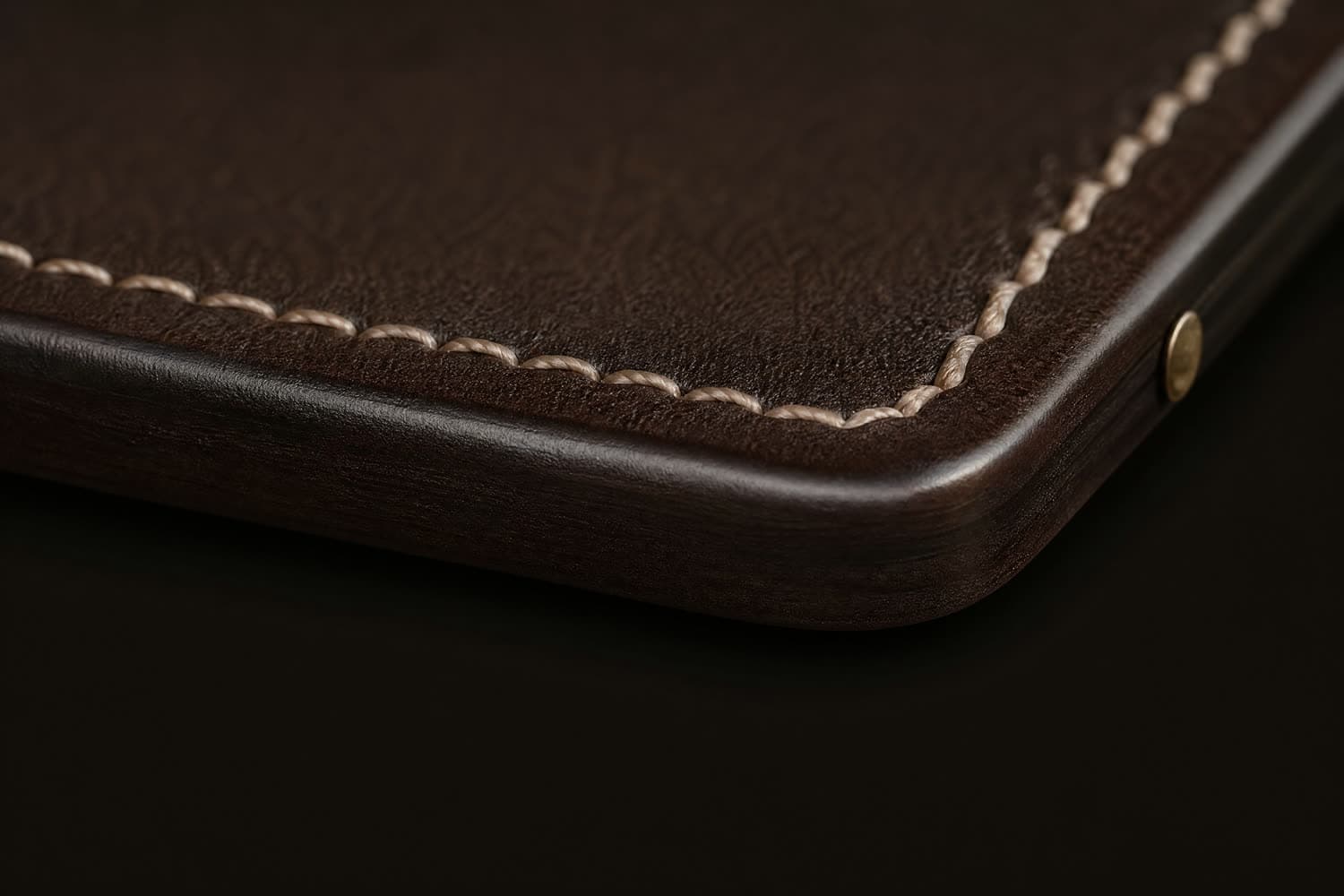
Burnished edges are the first place wear shows. A rub with a dry cloth every few weeks keeps them sealed.
When something goes wrong
It got wet
Blot with a towel, stuff the item loosely with paper so it holds shape, and leave it somewhere room-temperature and out of the sun. Never a radiator, never a hairdryer — heat shrinks and hardens the fibres permanently. Once it is fully dry, balm it. Expect a water mark on vegetable-tanned leather; it usually blends in within a few weeks of handling.
It has darkened unevenly
That is patina arriving, not damage. It evens out with handling because your hands distribute the oils. If you want to hurry it, balm the whole panel at once rather than spot-treating the pale bits.
Ink on the leather
Act fast and accept a partial result. Blot, do not rub. On vegetable-tanned leather a light abrasion with a very fine sanding sponge can lift surface ink, and then balm. Ink that has soaked into an unlined hide is permanent. No solvent will remove it without taking the finish with it.
White salt bloom in winter
Road salt. Wipe with a barely damp cloth, dry slowly, then balm. Do not soak it.
The card slots have gone loose
Normal on an unlined wallet after a year or two — the hide has moulded to what you keep in it. If they have gone genuinely slack, you were carrying more cards than the slot count. It is not reversible.
A stitch has broken
A saddle stitch does not unravel from one broken loop, which is the whole point of it. Send it to us; a re-stitch of a short run is usually straightforward and cheap. Do not glue it.
Colour transferred onto a light shirt
Can happen with an unlined vegetable-tanned item in the first few weeks, especially in heat. Buff the item hard with a dry cloth several times before it goes near pale fabric again. It stops.
If something has failed rather than simply worn, that is a warranty matter and not a care matter. Write to us — contact — and we cover the return postage for a justified claim. Your statutory rights run for two years from delivery; the terms set out how that works.